
Mars Isn’t Done With Us Yet: Why For All Mankind Season 5 Hits So Hard

For All Mankind
Season 5
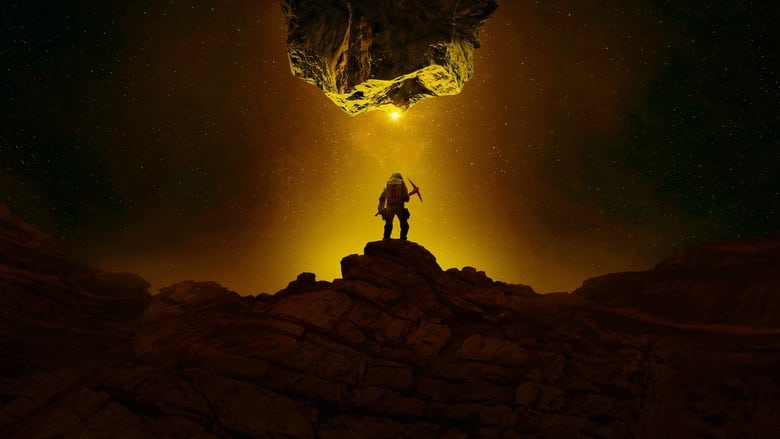
Season five of picks up in the 2010s, years since the Goldilocks asteroid heist. Happy Valley has grown into a thriving colony with thousands of residents and a base for new missions that will take us even further into the solar system. But with the nations of Earth now demanding law and order on the Red Planet, friction continues to build between the people who live on Mars and their former home.
If you’ve ever tried recommending For All Mankind to someone who thinks “space shows” are just rockets and jargon, you’ve probably said some version of: “No, it’s not about space. Space is just where the feelings go to get louder.” Season 5 proves that’s still the secret ingredient, even as the story grows into something bigger than NASA, bigger than national pride, and honestly bigger than Earth itself.
Apple TV+ released Season 5 as a 10-episode run that started on March 27, 2026 and wrapped on May 29, 2026. That matters because it means you can now watch the whole thing in one glorious spiral of “one more episode” decisions.
But the real reason Season 5 feels different is that it’s not just continuing a story. It’s starting the runway to the ending. Apple has already renewed the show for a sixth and final season, which makes Season 5 feel like the moment the show stops casually expanding and starts aiming.
The show has always been a sci-fi soap. Season 5 makes it feel inevitable.
Let’s say the quiet part out loud: For All Mankind is great because it understands that the space race was never only about engineering. It was about ego, fear, politics, grief, ambition, revenge, legacy, and the kind of hope that makes people do reckless things with clean consciences.
Season 5 continues the show’s best balancing act:
- Personal drama that actually matters, not filler
- Professional consequences that don’t reset each episode
- Political pressure that feels like weather: always present, always shaping everything
- Space exploration that is breathtaking, terrifying, and expensive in every possible way
It still delivers that perfect genre cocktail: prestige drama pacing, alt-history paranoia, and sci-fi scale. The kind of series where a character can have a life-changing conversation in a hallway… and five minutes later you’re staring at Mars like it’s a mirror.
Season 5’s real setting isn’t Mars. It’s momentum.
Earlier seasons asked: What if the space race never ended? Season 5 asks the scarier question: What happens when it doesn’t end… and people start building their identities around it?
Because by now, the series isn’t just “America vs the Soviets” (or Helios vs everybody). It’s an ecosystem. A world where space is no longer a headline. It’s a supply chain, a political weapon, a career ladder, a cultural identity, and a pressure cooker.
That shift changes the vibe. You can feel it in how Season 5 frames conflict: not as isolated crises, but as symptoms of a civilization stretching into places it’s not emotionally mature enough to handle yet.
Mars isn’t a destination anymore. It’s a society. And societies do what societies always do: they split into factions, they hoard power, they rewrite history, they build myths, they pick sides, and they find new ways to justify old instincts.
The characters are still the engine (and yes, Ed Baldwin still matters)
No matter how big the show gets, For All Mankind works because it stays stubbornly human. People don’t just pilot missions. They drag their baggage into orbit.
And that’s why certain characters hit harder than almost any “cool sci-fi protagonist” on TV. They’re not superheroes. They’re complicated, inconsistent, sometimes unbearable, often brilliant, and occasionally heartbreaking.
If you’re someone who’s watched the show through its peaks and dips and still feels like Ed Baldwin was the anchor, you’re not wrong. He’s the embodiment of the show’s core tension: the part of humanity that refuses to stop pushing forward… even when it probably should sit down and talk to a therapist for five minutes.
Season 5 leans into legacy as a theme. Not legacy as a trophy, but legacy as a weight. Not “what you achieved,” but “what your achievements cost everyone around you.” That’s where the show becomes more than escapism. It becomes a reflection.
The politics in Season 5 are the point, not a side quest
Some fans come for the space hardware. Some stay for the alternate history. And most of us end up hooked because the show understands that space exploration is never separate from power.
Season 5 continues the tradition of showing how political pressure shapes every decision:
- what gets funded
- what gets hidden
- who gets promoted
- who gets sacrificed
- what gets spun into propaganda
- and what gets quietly buried
The best part is that the show doesn’t need to shout its commentary. It lets the system speak through outcomes. It lets characters compromise, justify themselves, and still believe they’re the hero.
That’s why it feels believable even when it’s wild. The rockets are futuristic. The human behavior is ancient.
The “hope” of the show is real, but it’s not naïve
One of the reasons fans call this series top-tier is that it gives you a future that’s aspirational without pretending it’s clean.
Season 5 still carries that hopeful idea: becoming a spacefaring species might be necessary. It might even be inevitable. But it refuses to romanticize the road there. It shows the risk, the fear, the accidents, the moral debt.
That’s what makes the optimism land. It’s earned.
The show’s hope isn’t “we’ll all get along.” It’s more like: “We’re a mess, but we still build.”
If you finish Season 5 and want more, Apple has already opened the door
Season 5 doesn’t exist in isolation anymore. Apple is expanding the universe.
On the same day Season 5 ended, Apple premiered Star City, a Soviet-focused series set in the world of For All Mankind, launching May 29, 2026. It’s designed as a darker, spy-thriller flavored companion piece to the main show.
That’s a smart move, because the For All Mankind universe has always been at its best when it explores how different cultures, systems, and ideologies collide under pressure. The moon race was never just rockets. It was secrecy, intelligence, propaganda, sabotage, and fear — and Star City is basically a love letter to that shadow world.
The verdict: Season 5 is the show in its most confident form
If you love this series, Season 5 will feel like a payoff and a warning at the same time.
It’s still a sci-fi soap — in the best way — but it’s also the kind of show that makes you stare at Earth from a fictional distance and think: We could do this… if we survive ourselves.
And now that Season 6 is confirmed as the final mission, Season 5 carries an extra charge. It’s not just “what happens next.”
It’s the beginning of the endgame.